

Art deco vintage kitchens are making a real comeback, offering bold style, geometric drama, and unmistakable period charm for homeowners ready to move beyond safe choices. If you’ve ever been tempted by brass trim, graphic tile, or symmetrical lighting, but worried your efforts might fall flat or look inauthentic, this guide is for you.
Key Takeaways
- True art deco vintage style in the kitchen is defined by bold geometry, sleek metallics, symmetrical motifs, and saturated (but disciplined) color—avoid “Deco in name only” trends.
- There’s a surge in interest for Art Deco kitchen upgrades, but data proves most designs miss historical accuracy or overlook installation realities and pain points.
- Authentic Deco details can be added through backsplash tile, hardware, and lighting—focus on high-impact, low-commitment swaps to capture the look without a full remodel.
- What Is Art Deco Vintage in a Kitchen?
- Step-by-Step: Bringing Deco Style to Your Kitchen
- Real-World Pitfalls and How to Avoid Them
- Conclusion
- FAQ
What Is Art Deco Vintage in a Kitchen?
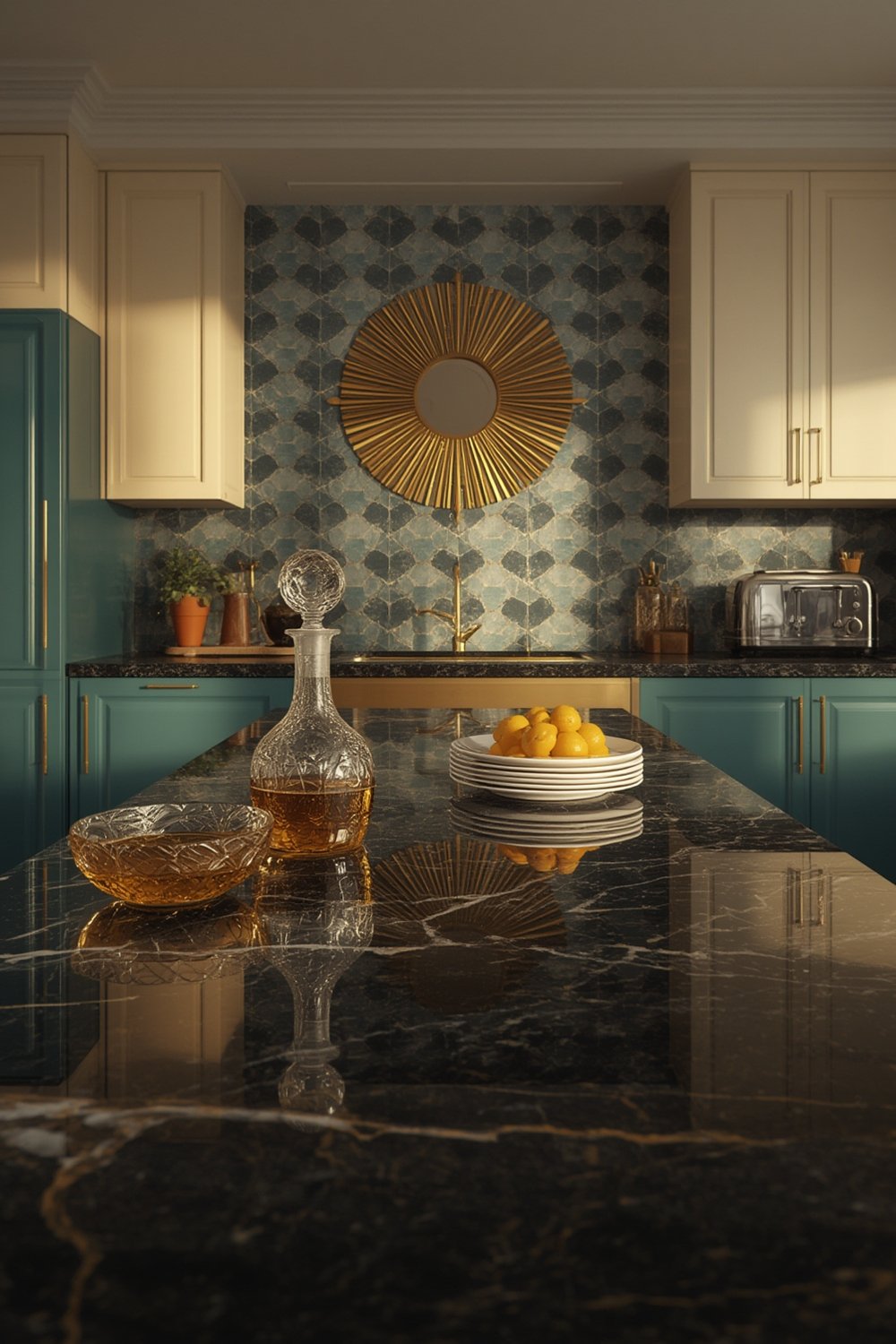
Art deco vintage style fuses machine-age glamour with precise geometry, rich finishes, and a touch of playfulness—but in the kitchen, it demands more than just adding a chevron tile or a mirrored tray. The look emerged in the 1920s and 1930s, embodying modernity, progress, and luxury, as seen in original design catalogues and museum archives of the period. True Deco kitchens, though rare, reflect these hallmarks:
- Colors: Contrasting neutrals (black, cream, pure white), deep jewel tones (emerald green, sapphire blue), metallics (chrome, brass, nickel), and sometimes accent pastels. Color blocking is crisp—nothing muddy.
- Materials: Glazed tile, linoleum, stainless steel, bakelite, and glass. Surfaces are glossy, clean, and often monolithic. Avoid overt rustic touches—they’re not Deco.
- Motifs: Repeated geometric patterns (chevrons, zigzags, sunrise fans, steps), stylized florals, and dramatic symmetry. Hardware and lighting often show stepped or streamlined edges.
- Proportions: Symmetry rules. Elements align vertically and horizontally. Where curves appear, they feel engineered, not “shabby chic.”
While period photos of residential Deco kitchens are rare (most survived in commercial interiors), the Metropolitan Museum of Art and V&A Museum catalogues show original appliances, tiles, and motifs. For even deeper accuracy, browse patent archives for 1920s kitchen hardware and browse 1930s appliance ads—and resist over-embellishing, which makes spaces look cartoonish rather than authentic. Despite a modern wave of “Deco-inspired” trends, true style is not just about pattern but about proportional discipline and material honesty (source).
Step-by-Step: Bringing Deco Style to Your Kitchen
Updating your kitchen with art deco vintage elements can feel daunting, but you don’t need to rip everything out or hunt for rare antiques. Here’s how to capture the look—authentically—while respecting modern kitchen needs:
-
Define Your Deco Palette.
Choose a bold but focused color scheme—black and white with one strong jewel tone is period-correct. Use a tool like the Sherwin-Williams historical palette for accuracy. Remember: Too many colors muddies the look. -
Choose the Right Backsplash Tile.
Opt for geometric or fan-based patterns in glazed porcelain or glass, not stone-look or rustic ceramics. Reproduction tiles from suppliers like Heritage Tile or custom-cut mirrored tile panels can be period-accurate. -
Upgrade Cabinet Hardware and Lighting.
Swap in symmetrical bar pulls with stepped designs, chrome or brass finishes, and period-inspired glass globe pendants. Match metals consistently; mixing chrome with brass often breaks Deco rules. -
Select High-Impact Accessories.
Add bakelite canisters, geometric trays, or mirrored backsplashes. Consider a statement clock or fan motif wall art for instant Deco impact, echoing original design cues. -
Maintain Layout Symmetry.
Even a modest kitchen can mimic Deco discipline: align upper and lower cabinets, center major hardware, and balance prominent motifs. Avoid crowding every surface—restraint is as important as ornament. -
Integrate Appliances Thoughtfully.
Modern appliances are rarely Deco by default. Choose models with rounded corners, chrome detailing, or panel-ready fronts. Consider pairing appliance upgrades with built-in cabinetry for a seamless, period-friendly look—explore our guide to cabinets for built in appliances for seamless ideas.

For “high-impact, low-commitment” moves, swap in geometric deco-style rugs or art deco kitchen appliance panels. For full authenticity, custom cabinetry and geometric inlays are gold standards, but they aren’t mandatory for a big visual payoff. If you want the warmer side of Deco, try pairing cream kitchen appliances with stepped chrome hardware—see our cream kitchen appliances guide.
For the cost and install process, most Deco backsplash tile falls in the $12-$32 per square foot range for materials. Professional installation averages $14-$22 per foot, depending on complexity and region. DIY-friendly peel-and-stick alternatives cost under $8 per foot; however, they can be tricky on uneven walls. Aim for a 1/16″–1/8″ grout width for crisp lines. If you want step-by-step instructions, our thrifted kitchens post covers salvage tile finds and installation hacks.
Real-World Pitfalls and How to Avoid Them
Most “Art Deco kitchen” posts gloss over the real frustrations: busy patterns that don’t align, hardware that cheapens the look, finishes that glare, or tiles that stain and chip. Below are actionable problems—and evidence-backed solutions—to keep your Deco kitchen stunning long after install:
| Problem | Why It Happens | Evidence-Backed Fix |
|---|---|---|
| Slippery floors from glossy geometric tile | High-gloss tiles are period-correct, but not always kitchen-safe | Choose semi-matte glazes or textured options; buffed linoleum can mimic shine without slickness |
| Grout staining and discoloration | Art Deco patterns use light grout; kitchens are high splash zones | Use stain-resistant epoxy or urethane grout; seal frequently if using cementitious grout |
| Tile pattern misalignment | Small pattern errors stand out in Deco designs | Dry-lay tiles to confirm layout; use leveling spacers to reduce lippage; mark centers for symmetry |
| “Looks too busy” or cartoonish | Mixing too many patterns or colors in search of Deco effect | Limit bold patterns to one plane; keep the rest minimal; stick to original period colorways |
| Harsh glare from mirrors or shiny metal | Too much direct light reflects off glossy surfaces | Install period-correct opal or sandblasted glass fixtures for even illumination |
If you’re struggling to blend appliances or keep sight lines clean, using integrated appliance panels is an effective solution—see our advice on integrated appliance panels for ideas that maintain Deco proportions without disrupting the pattern.
Lighting can be challenging. Period-accurate fixtures usually offer 250–500 lux (23–46 foot-candles) on counters. Stick to CRI 90+ and 2700–3500K for warmth. If you’re updating wiring in an older home, check load limits, as Deco fixtures can have heavy brass or glass shades. For more on choosing the right size and finish, see trend reports at Living Spaces decor trends.
Conclusion
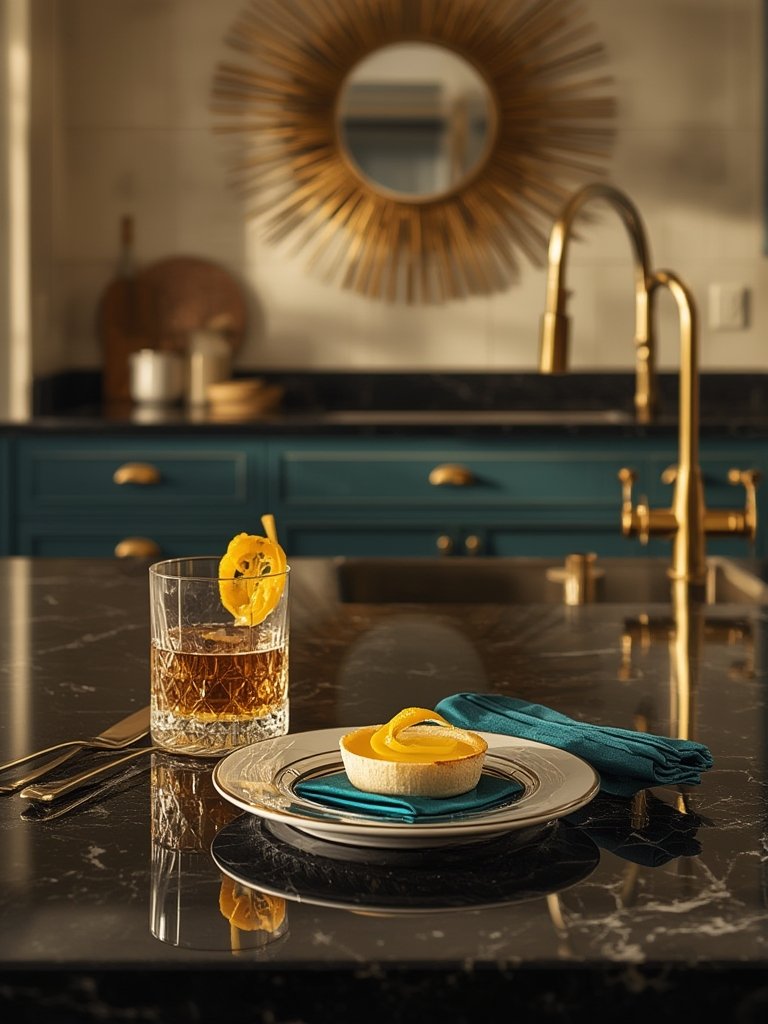
Art deco vintage kitchens are about bold statements and careful restraint. Focus on the right patterns, disciplined color, and genuine materials. Use high-impact swaps (tile, lighting, hardware) to get the look without breaking your budget or your back. When you get the details right, your kitchen will channel Jazz Age grandeur that feels as fresh in 2026 as it did a century ago.
If you’re ready to start your art deco vintage kitchen upgrade now, explore our other guides for sourcing tiles, integrating appliances, and balancing statement styles. Still have questions? Reach out or drop them below.
FAQ
What colors define an authentic art deco vintage kitchen?
Black and white provide the foundation, then add a saturated jewel tone such as emerald or sapphire, with accents in chrome, nickel, or brass. Avoid earthy or muted shades—Deco is about crisp contrast.
Can I use peel and stick tiles for an art deco backsplash?
Yes, peel and stick tiles are a smart way to achieve geometric deco patterns, especially for renters or tight budgets. Look for gloss finish, mirrored accents, and use a precision cutter for crisp lines. See our peel and stick backsplash kitchen tips.
How can I blend modern appliances into a Deco kitchen?
Choose panel-ready appliances and use integrated cabinetry to mimic original Deco symmetry and proportion. Hardware finishes and placement should align with other metal accents in your kitchen.
Are Art Deco lighting fixtures good for task lighting?
Yes, but choose fixtures with opal or frosted shades for even, soft light. Target around 300-500 lux (28-46 foot-candles) on work surfaces, and use CRI 90+ bulbs with 2700K–3500K temperatures.
What is the most affordable way to get an Art Deco look?
Start with swapping cabinet hardware, adding geometric accessories, and using peel-and-stick tile for the backsplash. These low-commitment moves deliver high impact with minimal investment.